Azul vs. Splendor
We've analysed over 30,000 Amazon reviews and 241 social mentions to find out which abstract strategy game is worth buying — so you get a real verdict from real players, not just a star rating.
Products
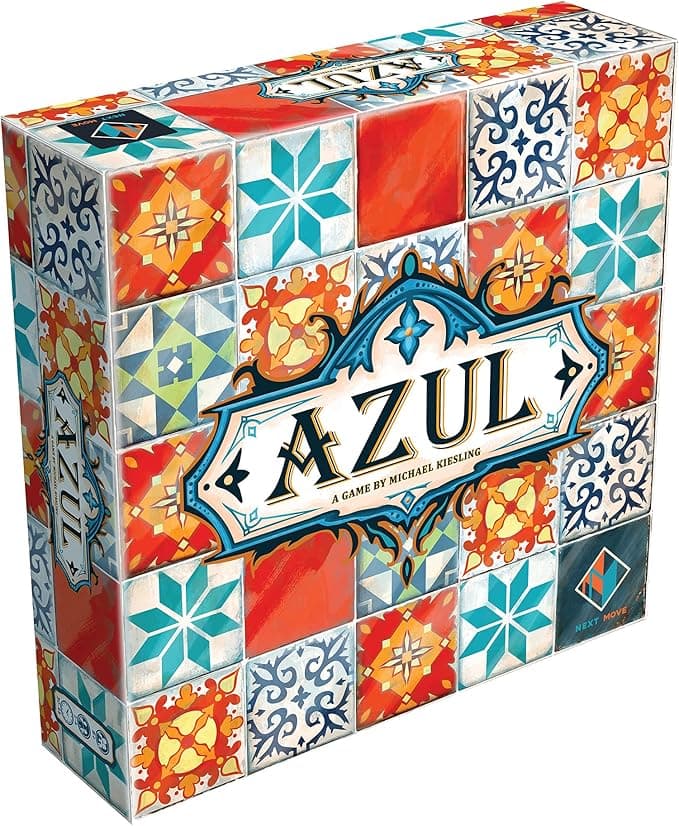
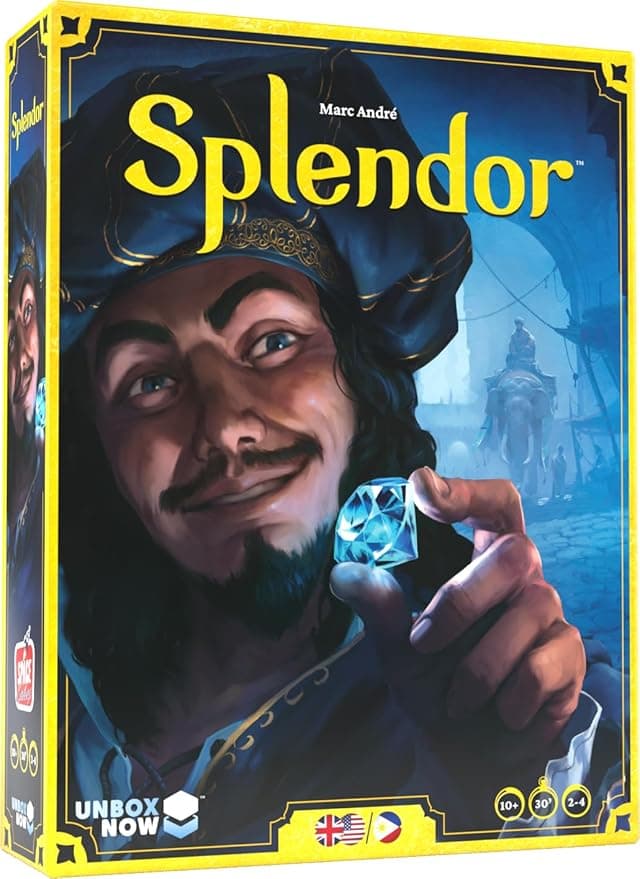
TL;DR
- —Overall edge: Dead heat on sentiment score (79/100 each) — but Azul leads on positive rate (72% vs 68%), has double the data, and the components justify the price premium for most families.
- —Best for families and mixed-age groups: Azul — accessible from age 8, visually striking, and its penalty mechanic creates genuine tension at every skill level.
- —Best for two players or budget-conscious buyers: Splendor — £12–16 cheaper depending on retailer, plays in under 30 minutes, and its gem tokens are irresistibly tactile.
Crowd sentiment breakdown
Azul
- Positive
- 72%
- Neutral
- 7%
- Negative
- 21%
Splendor
- Positive
- 68%
- Neutral
- 7%
- Negative
- 25%
The identical 79/100 scores make this the closest comparison in our database — but Azul holds a consistent edge on the underlying figures. Its 72% positive rate outpaces Splendor's 68%, and its 21% negative rate undercuts Splendor's 25%. Azul also has 165 scored mentions to Splendor's 76, making it the more statistically reliable result.
Both games score exactly 70 in their Amazon platform breakdown — the divergence comes from YouTube, where Azul's 149 comments carry predominantly enthusiastic first-impression reactions. Splendor's YouTube commentary includes more experienced hobbyist voices who have outgrown the game and say so. Neither game has a structural defect in its data; the negative rates reflect the normal spread of players who find a game 'not complex enough' rather than genuine disappointment.
By platform
Azul
Splendor
What people are saying
Azul
“A friend of mine brought Azul for our social evening. I rolled my eyes thinking this is going to be one of those family games for 20 minutes. We literally didn't touch any other game that day. The balance and depth with this one are on point.”
“Once you have read through the instructions, this is a simple and fun family game for children and adults alike. It can be played at a basic level or much more strategically. Easy to set up and lasts about 30–40 minutes, which is just about right.”
“Love this game, easy to learn and a game lasts around 40 mins max. Tactical and addictive — this game suits players from 10 to 100. Unfortunately my game boards seemed to be warped out of shape. At this price tag, it was a little disappointing.”
Splendor
“My husband read the blurb on the box and said it sounded really boring, so I was worried it wouldn't be enjoyed. I couldn't have been more wrong. Splendor is a simple enough game — you get gem tokens and buy cards, thereby increasing your gems to buy more. I am so glad I did!”
“Can't stop playing this game — it's very addictive! It's really all about planning ahead so you don't waste a move. Gives your brain a really good workout. Simple to learn and simple to teach. Playing time is about half an hour. Very quick to set up and put away.”
“Keep hearing about this and that game being a 'Splendor killer' — bollocks to that. This still holds up and can be quickly taught to anyone.”
Head-to-head: key battlegrounds
Learning Curve and Accessibility
Both games can be taught in five minutes and played inside 45. The official age ratings differ — Azul is 8+, Splendor is 10+ — and in practice that gap is real, not box-cover caution.
Azul's core rule is simple: draft tiles from a central display, fill your wall, score points. The complication is the penalty row — tiles that overflow your pattern get placed in a negative-scoring floor line. Young players instinctively grasp the goal (fill the wall) but regularly miss the penalty until it bites them. That tension is what keeps adults engaged too.
Splendor's rule is similarly simple: take gem tokens, buy development cards, accumulate points. But the engine-building logic — buying cards to generate permanent gem bonuses that let you buy more expensive cards — requires a slightly more abstract mental model. Parents report children of 8–9 playing it successfully, though one reviewer noted a 6-year-old joining in. Splendor clicks differently for different ages.
Azul for mixed-age tables and children under 10. Both work from 10+.
Table Presence and Components
This is where the price gap starts to make sense. Azul's tiles are thick, heavy, satisfying resin pieces in four colours — they click when you place them and pile up visually across the evening. The player boards are illustrated with Portuguese azulejo tilework. The factory display wheels create a centrepiece that looks like a proper game in play. Multiple reviewers reach for the same word: tactile.
Splendor's components are excellent in their own right. The gem tokens are thick poker-chip-weight plastic discs in six colours, and handling them is genuinely pleasurable. The cards are well-illustrated, if functional. The box is compact. What Splendor lacks is visual drama — midgame, it looks like a small spread of cards and tokens.
One recurring Azul complaint: boards occasionally arrive slightly warped from the factory. It's a minority issue but comes up often enough to be worth noting — check your copy on arrival.
Azul. The components are meaningfully better at the price point.
Strategic Depth and Replay Value
Both games have the 'five minutes to learn, a lifetime to master' profile, but they sustain long-term interest differently.
Azul's depth comes from the penalty mechanic and the spatial logic of completing rows. Because every tile you take that you can't legally place scores negatively, players must manage greed carefully. As skill increases, the game becomes about reading opponents' boards to force them into bad drafts — a layer of interaction that's invisible to beginners but becomes the whole game at higher skill levels.
Splendor's depth comes from reading the noble tiles and blocking opponents' engine builds. A YouTube commenter put it bluntly: 'I find Splendor to be borrrring. 95% of turns are "I take chips". The game gets worse as players get better.' That view is a minority opinion in the data, but it describes a known ceiling: once players understand optimal gem collection, the game can feel routine.
Azul for sustained long-term interest. Splendor is excellent for 20–30 sessions before some players want more.
Two-Player Performance
Both games work at two players, but both also improve with more. At two, Azul's factory display changes to use fewer factories, and the drafting becomes a head-to-head tile-denial game that's tense and fast. Splendor at two is essentially a race — less blocking, more focus on your own engine — which some couples prefer and others find too solitaire-like.
If two-player is your primary use case, both hold up. Splendor's shorter play time (~25 minutes at two) makes it an easier 'one more game' option at the end of an evening.
Tie. Azul two-player is richer; Splendor two-player is faster and lighter.
Value for Money
Splendor wins decisively here. At £22.08 from Zatu it's one of the better-value gateway strategy games available. Azul is £38.45 at the same retailer, a £16 gap. On Amazon the difference narrows (£34.33 vs £29.49) but Azul is still £5 more.
Whether Azul's premium is worth it depends on what you're optimising for. For a family buying their first tile game, the visual impact and tactile quality of Azul make it feel like a premium purchase. For a couple looking for a quick 30-minute game to rotate through their collection, Splendor at £22 is exceptional value.
Splendor.
Full specs comparison
Our verdict
Buy Azul if…
Buy Azul if you want a game that will impress on the table, works comfortably with ages 8 and up, and has enough strategic depth to stay interesting over dozens of sessions. It's the better long-term investment for most families — stronger positive rate, larger evidence base, and a penalty mechanic that resists 'solved' play.
Buy Splendor if…
Buy Splendor if budget matters, you play mainly at two players, or you want a fast 30-minute game that's exceptionally easy to teach new players. At £22.08 from Zatu it's one of the strongest buys in the category — just be aware the YouTube data suggests some experienced players find the ceiling arrives sooner than expected.
When the scores tie, the data defers to the components, the sample size, and the long-term appeal. On all three, Azul comes out ahead — but Splendor's price is a genuine reason to choose it, and nobody who buys either will regret it.