Buying Guide
Best Board Games for Kids (UK 2026)
Rated by Real Parents
Most 'best board games for kids' lists are written by editors who haven't played the games with children. This one isn't. Every score here is calculated from real parent reviews — people who bought the game, played it with their kids, and wrote about what actually happened.
We've covered 13 games across all ages from 5 upwards, grouped by minimum recommended age. Amazon star ratings are included alongside our scores for context — but where the two diverge, we explain why.
At a Glance
| Game | Age | Score | From |
|---|---|---|---|
| Outfoxed! | 5+ | 84/100 | £16.99 |
| Guess Who? Classic | 6+ | 84/100 | £14.00 |
| Mysterium Kids: Captain Echo's Treasure | 6+ | 76/100 | £28.99 |
| Dobble Classic | 6+ | 75/100 | £9.99 |
| Catan Junior | 6+ | 73/100 | £28.99 |
| Connect 4 Classic | 6+ | 72/100 | £9.99 |
| Ticket to Ride: First Journey | 6+ | 68/100 | £24.89 |
| Zombie Kidz Evolution | 7+ | 82/100 | £23.39 |
| UNO Classic | 7+ | 68/100 | £5.19 |
| Sleeping Queens | 8+ | 85/100 | £11.25 |
| Sounds Fishy | 8+ | 85/100 | £16.00 |
| Herd Mentality | 8+ | 81/100 | £15.99 |
| Dixit | 8+ | 70/100 | £25.49 |
Outfoxed!
84/100Best from ages 5+
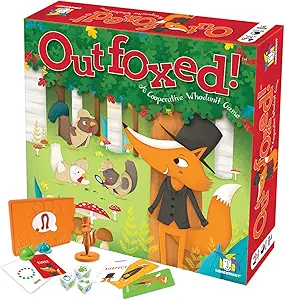
A sneaky fox has stolen Mrs. Plumpert's pot pie and is making a run for it. Players work together — rolling dice, collecting clues, using the evidence decoder to eliminate suspects before the fox escapes. Outfoxed! is the only cooperative game for the youngest age bracket on this list, and the evidence behind it is the strongest here: 7,082 reviews, 89% positive, no reading required. The deduction mechanic keeps adults genuinely engaged — children feel clever when they crack it. It is the safest first board game recommendation we can make for ages 5–6.
“However, Outfoxed is the first game we've played that actually requires some strategic thinking and is enjoyable for adults too.”
“Really good family fun. Easy to play and understand the rules. Love the fact you have to work together as a team — works very well for my children.”
Best for: Ages 5–10. First cooperative game for families. Mixed-age groups where adults need to stay engaged.
Guess Who? Classic
84/100Best from ages 6+
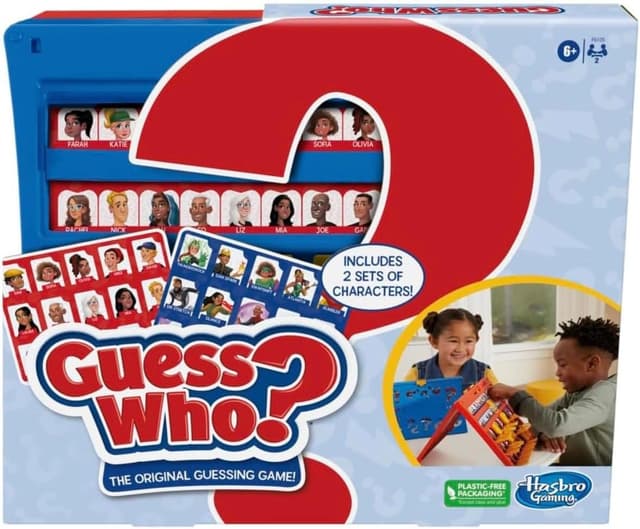
Two players. Twenty-four mystery characters. One yes/no question at a time until one of you figures out who the other is hiding. Guess Who? requires no reading, plays in 15 minutes, and has the highest positive rate of any 6+ game on this list at 94%. The modern version is redesigned for storage — frames fold flat, no loose counters to lose — and parents consistently mention durability. At £10.99 it is the best-value deduction game available.
“Old style game — newly packaged. There's no loose pieces to get lost, as all the parts are attached. Frames come with fold-away stands and both frames click together for easy storage.”
“Amazing quality. Ideal for little (and big) kids. Fallen down lots of times already and still intact.”
Best for: Ages 6–10. Two-player households. Short play sessions. Grandparent gift — the familiar format needs no explanation.
Mysterium Kids: Captain Echo's Treasure
76/100Creative cooperative for ages 6+
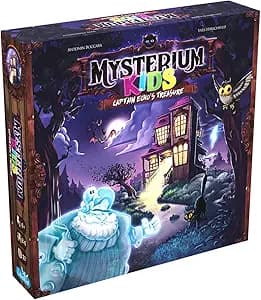
One player becomes the ghost of Captain Echo and guides the others to the right image — not with words, but with sounds made using an included tambourine. Taps, rhythms, whispers, impressions. For the right child — creative, imaginative, comfortable with open-ended rules — it is genuinely magical. For children who need clear objectives and defined scoring, it frustrates. Know which you have before you buy.
“We bought this as a gift for our 5 and 8 year old boys after playing the adult version. They did it beautifully! The box includes a tambourine that you'll use to create different sounds on.”
“My kids absolutely love it and it's challenging enough to play as a family.”
Best for: Ages 6–10. Imaginative, creative children. Up to 6 players. Not for children who prefer competitive, rules-defined play.
Dobble Classic
75/100Best from ages 6+
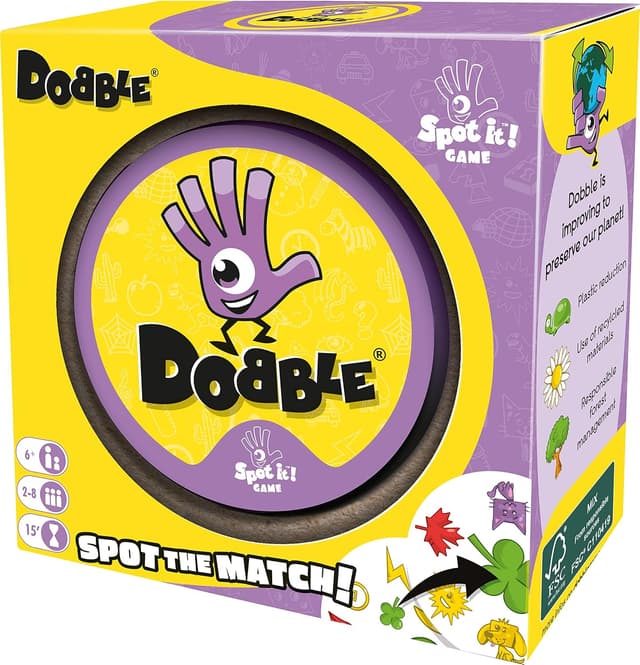
Every card shares exactly one matching symbol with every other card. Spot it before anyone else does. Each round takes between five seconds and two minutes. Dobble works for ages 6 to 96, plays in 15 minutes, and fits in a tin. That combination of brevity, simplicity, and universal accessibility is why it has nearly 40,000 Amazon reviews. The 15% negative rate is mostly parents who found it too chaotic — fair warning if your household is noise-sensitive.
“Dobble Card Game has become a staple in our family game nights, offering a dynamic and engaging experience that transcends age barriers.”
“Love this game so much! Brought for the children but actually it's even better for adults! Very fun and fast paced. Easy to get the hang of and suitable for all ages.”
Best for: Ages 6+. Any group from 2 to 8. Works at parties, as a warm-up, or between longer games.
Catan Junior
73/100Best from ages 6+
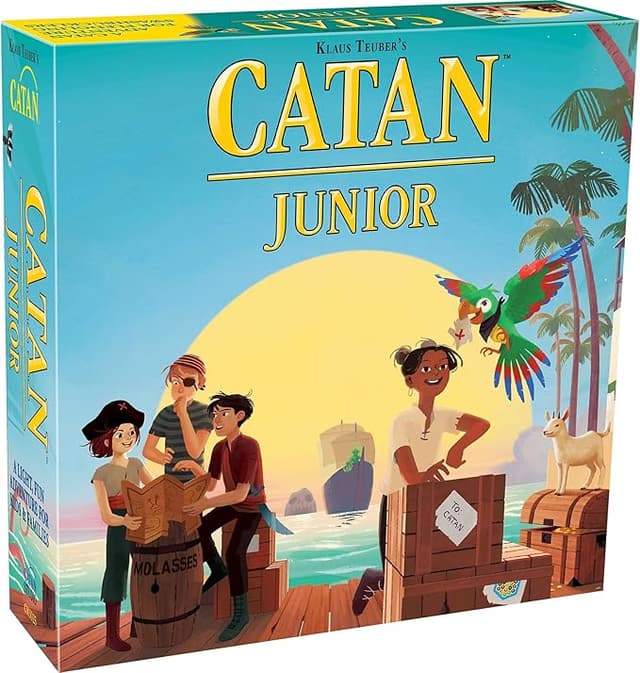
A simplified Catan built for ages 6 and up — players build ships and settlements on a circular island, collect resources, and trade. It is the most ambitious game in the 6+ category: more depth, more replayability, genuinely engaging for adults. The 21% negative rate is almost entirely parents who tried it with younger sixes and found it too complex. In practice it works significantly better from age 7 or 8.
“CATAN Junior has been great all around! A rare game that my wife and I actually enjoy playing. And our 6 year old is able to beat us without us going easy on him.”
“Super easy and interesting to play with kids! Very happy.”
Best for: Ages 7+ in practice despite the 6+ label. Families who want real strategic depth. A natural stepping stone to the adult game.
Connect 4 Classic
72/100Classic two-player from ages 6+
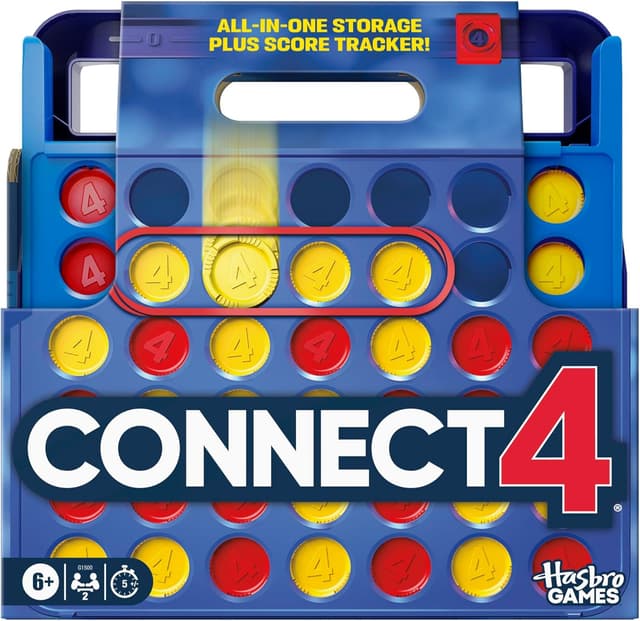
Drop coloured discs. Get four in a row before your opponent does. Connect 4 is the most familiar game on this list, requires zero setup beyond unfolding the frame, and plays in 10 minutes. At £9.99 from Argos it is the cheapest competitive game here. Pure two-player abstract strategy — no luck, no reading, no complications.
“Great game loads of fun.”
“Great fun with my grandkids. Highly recommend.”
Best for: Ages 6+. Two players only. First competitive strategy game. Travel and holidays.
Ticket to Ride: First Journey
68/100Gateway strategy from ages 6+
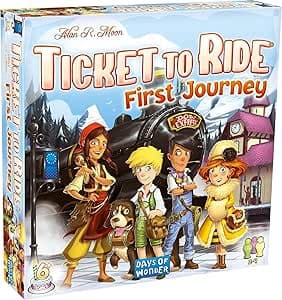
A simplified version of the classic Ticket to Ride — players collect train cards and claim routes across a streamlined European map to complete destination tickets. Designed as a gateway into the full series. The 24% negative rate is almost entirely parents who found it more complex than expected for the stated age 6+. It plays better from age 7 or 8 in practice. Still a well-designed introduction to route-building strategy for families who want something with more depth.
“This is a great family board game and a perfect introduction to the 'Ticket To Ride' series. The rules and gameplay are streamlined and simplified so younger players can pick it up quickly.”
“Brilliant game, full of strategy. Easy instructions to follow. We played it with 2 children aged 8 and 10 and they picked it up quite quickly.”
Best for: Ages 7–10 in practice. Families who want to introduce strategy games. Natural stepping stone to full Ticket to Ride.
Zombie Kidz Evolution
82/100Best from ages 7+
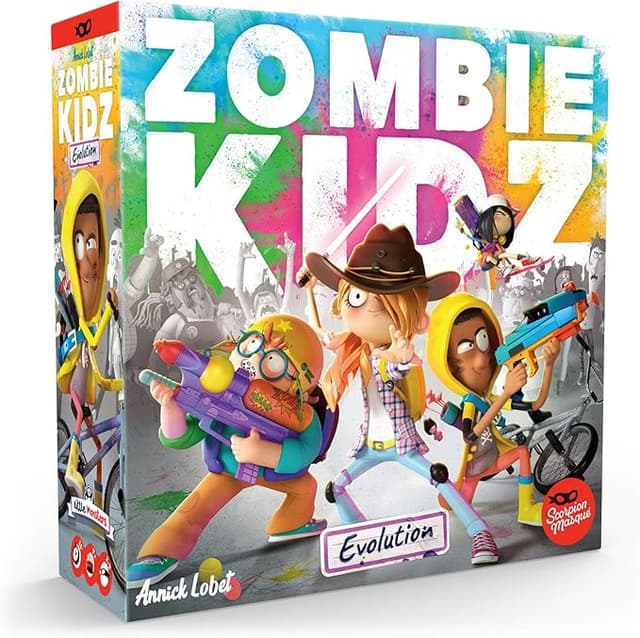
Zombies are invading your school. Work together to lock the doors and hold the gates — and every time you complete a mission, you unlock a sealed envelope adding new rules and powers. Zombie Kidz Evolution is a legacy cooperative game: it genuinely changes as you play it. At 82/100 with 85% positive it is the highest-scoring 7+ game on this list. Most families get 20–30 sessions out of it before all the envelopes are open, and children return to it voluntarily throughout.
“Zombie Kidz has captured the imagination of our family more than any game we've ever played. All in all, possibly the best board game I've ever played, and I'm 45!”
“The boys love it and we've played maybe 20 games over 3 months — which is a huge success if you ask me.”
Best for: Ages 7–12. Children who respond to progression and unlocks. Families who want a game that evolves over weeks.
UNO Classic
68/100Budget pick from ages 7+
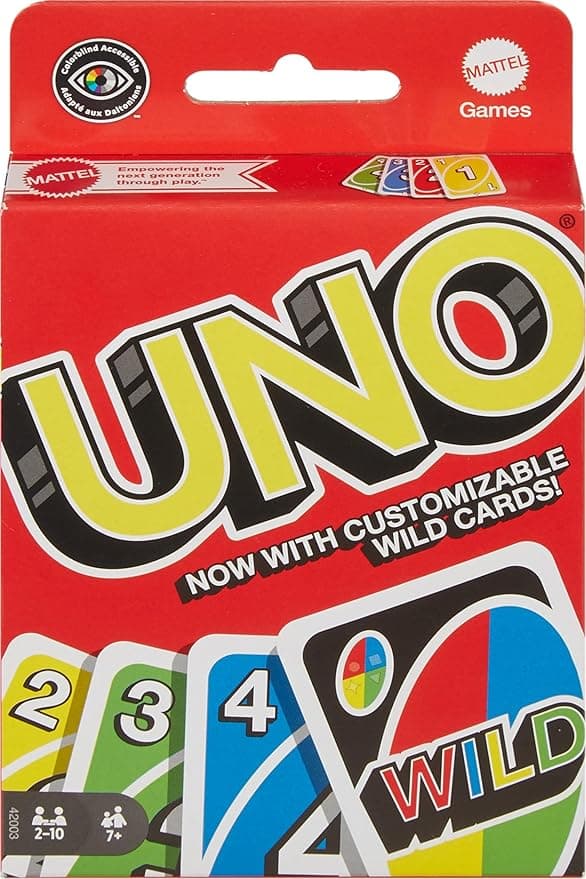
Match colours and numbers, play action cards, shout 'UNO' when you're down to one. UNO is the most universally recognised card game on this list and the cheapest at £6.99. It works well for 2–4 players. One practical note: the +4 card causes rule disputes in most families — the official rules are clear but widely ignored, and house rules vary enormously. Agree on your version before the first game starts and you will be fine. Games with 5+ players can also run longer than expected.
“We recently had a blast playing Uno Card Game with our kids, and it quickly became a family favorite! Uno is incredibly easy to learn, making it perfect for kids of all ages.”
“This is so much fun and brings nostalgia to me every time I play it. Definitely worth it!”
Best for: Ages 7+. 2–4 players. Budget pick at £6.99. Agree house rules on the +4 card before you start.
Sleeping Queens
85/100Joint top scorer — ages 8+
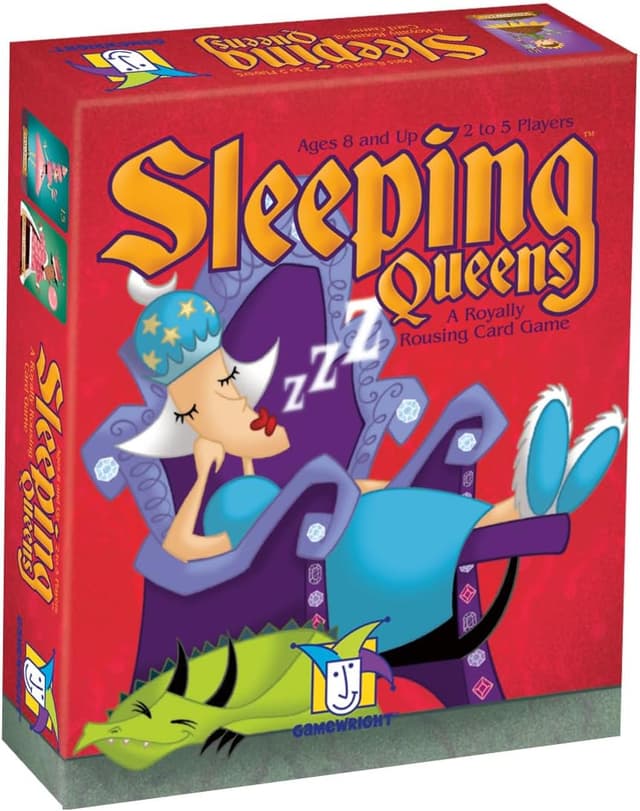
Use kings, magic wands, and potions to wake sleeping queens — while blocking opponents with knights and sleeping potions. Sleeping Queens has real arithmetic built in: you can play number combinations that add up to another card, which means maths practice disguised as a card game. At 85/100 with 92% positive from 8,403 reviews it is the joint top scorer on this list. The 4% negative rate is essentially noise. At £11.25 it is exceptional value.
“'Sleeping Queens' — oh my God! This is SUCH an addictive game — I'm already hooked!!”
“My little niece doesn't like losing. To my great relief, she and her nine-year-old brother had a great time with it.”
Best for: Ages 8–12 (works from 6 with help). 2–5 players. Best value game on the 8+ list.
Sounds Fishy
85/100Joint top scorer — ages 8+
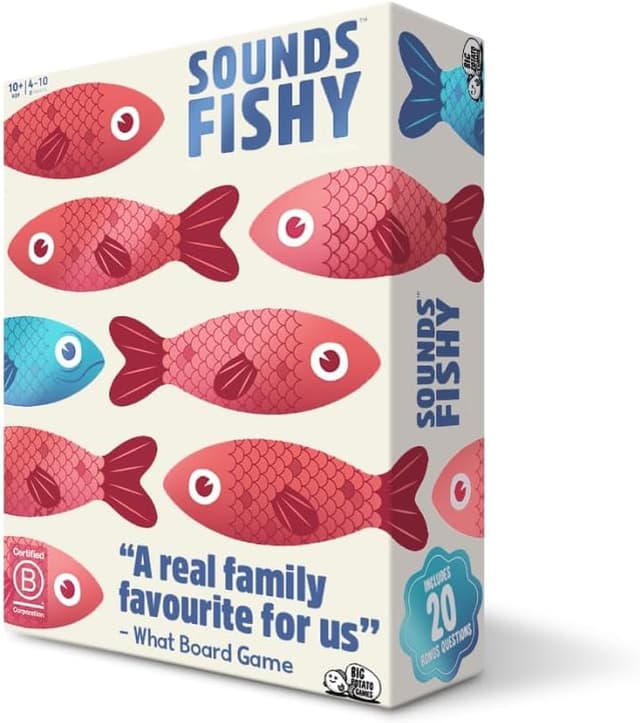
One player draws a question card only they can read, gives an answer, and the other players also give answers — then everyone votes for which answer is the true one. You do not need to know the actual answer; you just need to sound convincing. Sounds Fishy rewards quick thinking and a straight face over any kind of knowledge, which is why it works for such a wide age range. At 85/100 with 90% positive, it is the joint best scorer on this list.
“This game is so much fun, and suits all members of the family. Easy to understand. Can be played for 5 minutes (speedy) or hours.”
“This game was great fun with all ages from 8 to 70+. You don't need a lot of knowledge — just the ability to make something up in answer to the question.”
Best for: Ages 8+. Any group from 2 to 6. Works especially well across mixed ages.
Herd Mentality
81/100Best party game — ages 8+
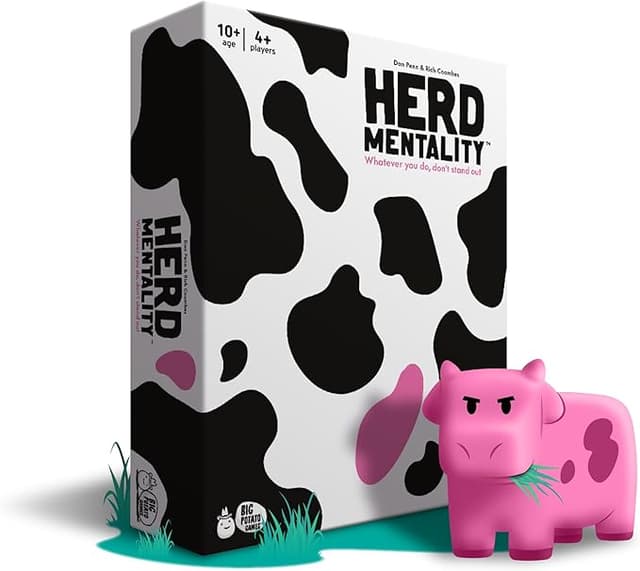
Everyone writes what they think the majority of the group will write. Match the herd and win a cow. Be the only one who answered differently and you get the pink cow — which you keep until someone else becomes the odd one out. Herd Mentality rewards knowing your group rather than knowing facts, which means children and adults compete on equal terms. At 4–20 players it is the largest-group game on this list and the only one genuinely designed for big family gatherings.
“This is a fun party game that can take as long or as little time as the party dictates. It includes plenty of questions for you to guess what the majority of the group will put down.”
“This is a brilliant game for the Christmas period and works well for a wide mix of ages. It's quick to set up, easy to understand, and gets everyone involved without lots of rules to remember.”
Best for: Ages 8+. Groups of 6 or more. Christmas, family gatherings, parties. Scales to 20 players.
Dixit
70/100Creative storytelling — ages 8+
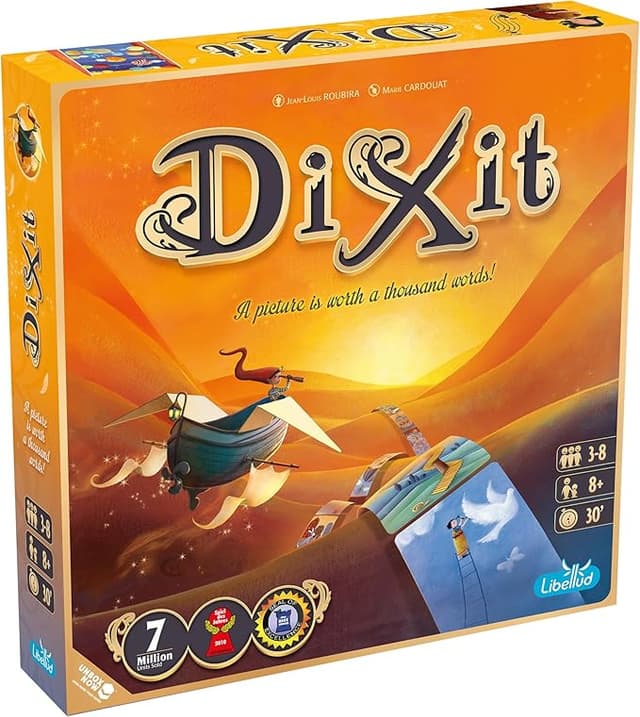
The storyteller describes one of their beautifully illustrated surrealist cards — with a word, a phrase, a sound — and everyone else plays a card they think fits. Points go to people who guess the right card, but the storyteller scores nothing if everyone guesses correctly, so the clue must be precise enough to find some people, vague enough to miss others. Dixit divides opinion cleanly: families who enjoy creative storytelling tend to love it; families who want defined competitive scoring often find it frustrating.
“A great game that moves away from the mainly German-designed games. Dixit really does bring something different in attempting to make you use your knowledge and understanding with the other players.”
“Everything Dixit is ethereal and weird and beautiful.”
Best for: Ages 8–12. Creative, imaginative children. Families who enjoy lateral thinking over competitive scoring.
Which Cooperative Game is Right for Your Child?
Cooperative, no reading required, 89% positive from 7,082 parents. The safest recommendation on this list.
15 minutes, no reading, 94% positive, folds flat for storage. Best value deduction game.
5 seconds to 2 minutes per round, works from 2 to 8 players, fits in a tin.
The legacy hook — sealed envelopes unlocking new rules — means 20–30 sessions before the box is exhausted.
Both score 85/100. Herd Mentality scales to 20 players; Sounds Fishy is better for 4–6.
Unlike anything else on this list — but read the caveat first and decide if the open-ended mechanic fits your child.
Connect 4 £9.99, Dobble £10, Guess Who? £10.99, Sleeping Queens £11.25 — four strong options.
About These Scores
Our sentiment scores are calculated from 95 scored parent reviews across these 13 games, weighted by upvotes and cross-referenced with Amazon star ratings. Amazon ratings are cited for context — where our score and the Amazon rating diverge significantly (notably UNO), the difference reflects the depth of what's being said in reviews rather than star-click volume. Mysterium Kids has a very small review base (46 Amazon reviews) — treat its score with more caution than Outfoxed! or Sleeping Queens. All prices were last checked in March 2026.
Affiliate disclosure: links on this page may earn us a small commission at no extra cost to you. This does not affect our recommendations — all scores are calculated from real parent reviews, not editorial opinion.