Buying Guide
Best Board Games for 10+ Year Olds UK (2026)
Rated by Real Parents
Ten is the age when children start thinking several moves ahead — holding a plan, adapting when it fails, and genuinely enjoying the satisfaction of outmanoeuvring an opponent. The games in this list reward that development. Every one of them is also a game adults play by choice, not obligation: the strategy runs deep enough to keep the table engaged across generations.
We scored each game using a blend of Amazon star ratings (40%) and qualitative sentiment analysis from real parent and reviewer discussions (60%). The resulting 0–100 score captures more than a star average — it weights the content of what people actually say about playing these games with children. Prices were checked in April 2026.
At a Glance
| Game | Age | Score | From |
|---|---|---|---|
| Codenames | 10+ | 80/100 | £15.39 |
| Splendor | 10+ | 79/100 | £22.08 |
| Azul | 8+ | 79/100 | £38.45 |
| Ticket to Ride: Europe | 8+ | 78/100 | £29.89 |
| The Crew: Mission Deep Sea | 10+ | 74/100 | £13.29 |
Codenames
80/100Best from ages 10+
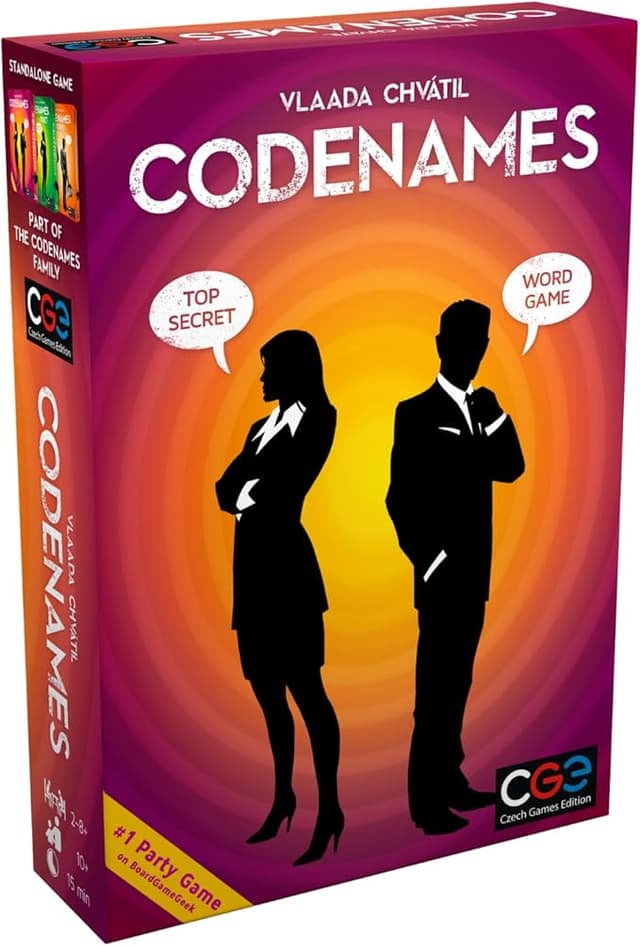
Two teams, twenty-five word cards laid in a grid, and one player per team who can see which words belong to which side. The spymaster gives a single clue — one word and a number — and their teammates try to guess which cards it connects. Get it right and you keep guessing; touch the assassin card and your team loses instantly. The pressure on the clue-giver is real: you're trying to link multiple words with a single clue while steering your team away from the opponent's cards and the one that ends the game immediately.
Codenames has the highest sentiment score in this list at 80/100 and the widest player range — it genuinely works as well with eight players as it does with two. The 19% negative rate mostly captures one specific frustration: clue interpretation disagreements within teams. That's not a quality problem; it's a social one, and for most households it adds to the appeal. With 38,912 Amazon reviews, the data behind this recommendation is among the strongest on the site.
“It's not a sit around for hours board games with loads of complicated rules that you only understand after finishing the game. It's a quick and easy, get up and running fast and enjoyable family / party game.”
“We've had Codenames for a while now, and it's become one of our absolute favorite games to play especially during weekend family dinners or when friends come over. It's fun, clever, and always leads to lots of laughs (and some friendly competition)!”
“Great fun for all levels - even managed to teach this one to mum and dad and now they request it every family get together!”
Best for: Large families and mixed-age groups — the game works across a vast age range, scales to any player count above two, and the social dynamics are funnier the more diverse the group.
Splendor
79/100Best brain-burner for ages 10+
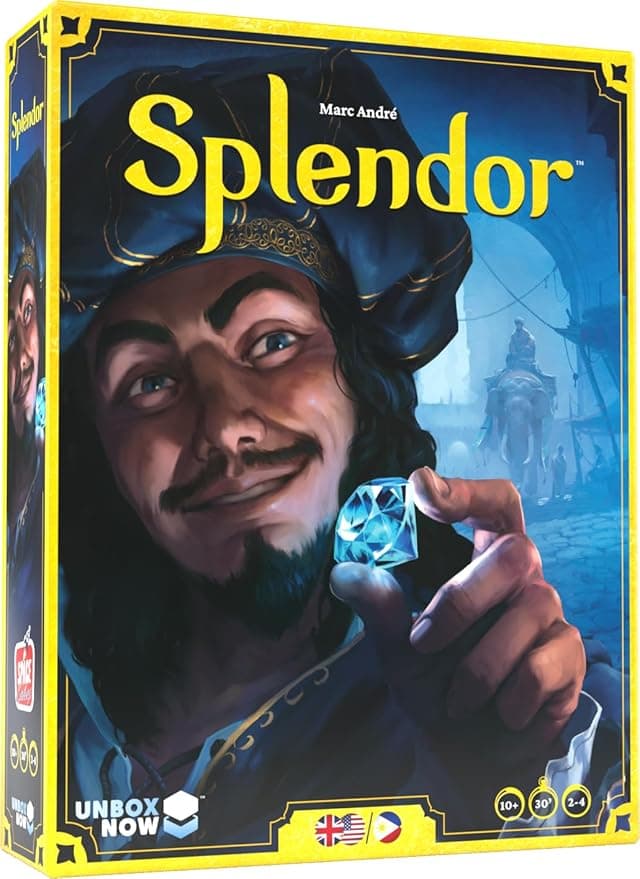
Players collect gem tokens to buy development cards, and those cards become permanent gems that reduce the cost of future purchases. The goal is to reach 15 prestige points before anyone else — mostly by collecting higher-value cards and attracting nobles (bonus cards requiring specific card combinations). Turns are fast: take gems, buy a card, or reserve a card. The rulebook fits on two pages. Games run about thirty minutes.
The 25% negative rate is the highest in this list, and it's worth understanding. Most criticism comes from experienced hobby gamers who find the strategic ceiling lower than expected after many sessions. For a 10-year-old developing strategic instincts — or a family that plays weekly rather than daily — that ceiling is effectively invisible. The components are a standout: weighted poker-style chips that make every transaction tactile.
“Cant stop playing this game it's very addictive! We really like it and so do our teenage children. It's really all about planning ahead so you dont waste a move. Gives your brain a really good work out. Simple to learn and simple to teach.”
“Splendor is a simple enough game, you get gem tokens and buy cards, thereby increasing your number of gems to buy more cards and gaining prestige. It doesn't sound all that thrilling, but there is something so fun and enjoyable about the game, you just find yourself wanting to play again and again!”
“Very easy to pick up but once you get into it you realise just how much depth splendor has, enjoy at your peril as that victory you had in your sights is snatched away at the last second.”
Best for: Households with teenagers or mixed adult/child groups who want a strategy game completable in one sitting without a 90-minute rules read first.
Azul
79/100Best abstract strategy for ages 10+
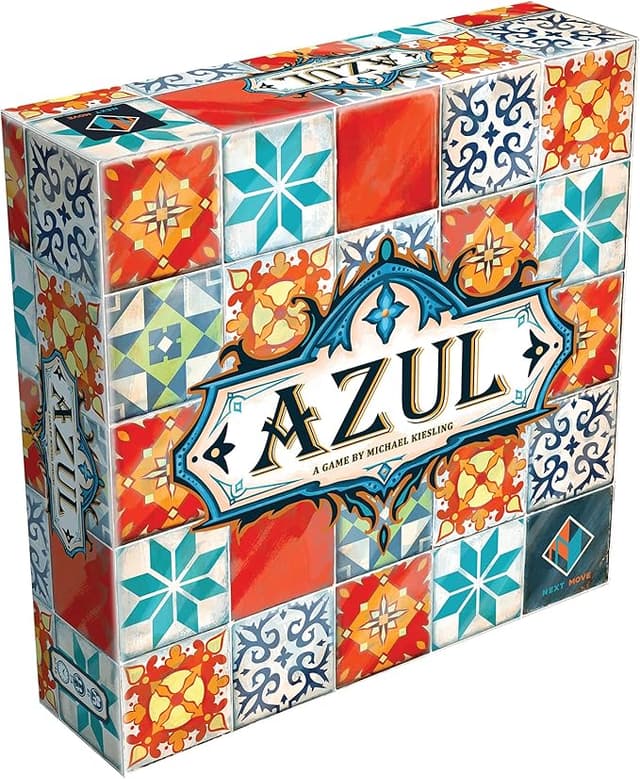
Players draft coloured tiles from a central factory display, arranging them into rows on their player board. Complete a row and one tile moves to your mosaic scoring wall; incomplete rows are discarded, costing penalty points. The tension comes from the drafting: picking a colour takes all tiles of that colour from the factory — which may be exactly what your opponent needed. It's an elegant mechanism that creates genuine decisions from the first turn.
Azul has the most scored mentions of any game here — 165 — which gives the 79/100 score meaningful statistical weight. The 21% negative rate splits between two issues: the scoring rules require a careful first read, and some reviewers report warped game boards at this price point. That last complaint is worth noting: at £34, a warped board is legitimately disappointing. Azul's Spiel des Jahres win reflects a broad consensus that the game is exceptional when components are right.
“Once you have read through the instructions, this is a simple and fun family game for children and adults alike. It can be played at a basic level or much more strategically. Easy to set up and lasts about 30-40 minutes, which is just about right.”
“Love this game, easy to learn and a game lasts around 40 mins max. Tactical and addictive this game suits players from 10 - 100.”
“A good game for 4 people, involves strategy, luck and cunning. Quick to learn and good to play over a few sessions.”
Best for: Families who want an abstract strategy game with beautiful components — the drafting mechanic clicks in one game, and the scoring depth keeps it interesting across ages.
Ticket to Ride: Europe
78/100Best map strategy for ages 10+
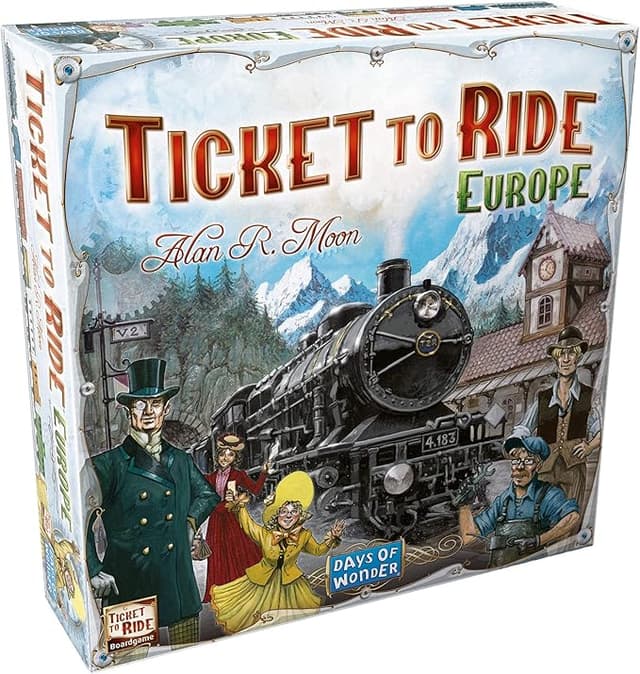
Players collect coloured train cards and spend them to claim routes across a map of Europe — connecting cities listed on their secret destination tickets. Complete all your destinations and you score points; fail and you lose them. The European map introduces tunnels, ferries, and train stations compared to the original US edition, adding useful decision-making without complicating the core mechanic. A full game runs 60–90 minutes.
The 22% negative rate concentrates in two areas: the rulebook is denser than the game deserves (most families need a careful first read and a practice half-game before it flows), and at 90 minutes it's a real time commitment. The consistent upside: it gets replayed. 14,549 Amazon reviews averaging 4.7 stars and 51 scored parent discussions make the evidence for longevity unusually solid.
“Ticket to Ride is fast becoming a classic. The Europe edition provides some extra complexity (which you can choose to ignore) as well as a more complex map (which you can't) compared to the US edition. The extra gameplay elements are actually quite clever and I feel they add something, rather than just being a novelty.”
“The rules can SEEM finicky to newcomers, but once understood you realise how very simple they are and the game play is exceedingly engrossing often resulting in multiple games on the trot.”
“Really enjoyable game. For our family (with young children) it was not quite as easy to learn as the blurb said it would be. But after 30 mins studying the rules and half a game walkthrough we were off around Europe.”
Best for: Families ready to invest in a proper games night — the 60–90 minutes is a real commitment, but few games at this price produce as many repeat plays.
The Crew: Mission Deep Sea
74/100Best cooperative for ages 10+
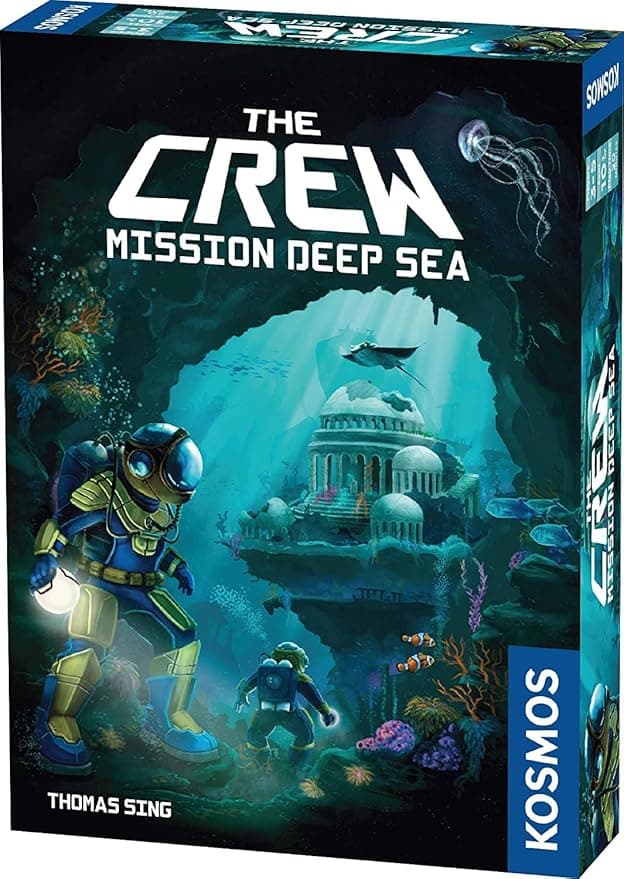
A cooperative trick-taking card game structured as a series of missions. Each mission assigns specific cards to specific players, and the team must win exactly those cards — but you cannot discuss strategy or show your hand. Communication is limited to a single card played face-up as a token once per round. The difficulty scales across 32 missions, and the team either all wins or all loses together.
The Crew has the highest positive rate in this list at 78% and the lowest negative rate at 15% — the sentiment data is clean. The Amazon review base is smaller than the other games here (1,717), which reflects its niche rather than its quality; 99 scored parent discussions add context. The main caveat: four players is where the game genuinely shines. At two players the communication constraint loses some of its sting.
“Good quality, enjoyable trick taking game! Learning the rules if you have a general idea of trick taking, is definitely not even 5 minutes. Playing it (and succeeding) can be as easy or as impossibly tricky as you want to make it.”
“Really fun easy to play game in a travel size box. Each mission adds new challenges to work through and unlike many games while there is luck of the draw and chance the fact it's a team based all succeed or all fail makes it fun.”
“Me and my family played through the original Crew and found it an enjoyably difficult challenge. This game continues that legacy. Not only does Mission Deep Sea have the same energy of cooperative family play combined with intense focus and puzzle, but it improves it in some ways.”
Best for: Families who prefer cooperative play — specifically households with 3–5 players where the communication restriction creates real tension across 32 escalating missions.
Which Board Game is Right for Your 10+ Year Old?
Both explain in under five minutes and produce a complete game in 30 minutes — the right length for building the habit without overwhelming a new player.
The only game here that works for eight players and actually feels better the more people are around the table.
Regularly cited as a strong head-to-head option. Codenames works at two but loses some of its social energy.
The route-blocking mechanic generates genuine drama and each game plays out differently enough that sessions don't blur together.
Best-value cooperative game here at £13.29, with 32 built-in missions that scale difficulty. If they finish it and want a harder cooperative challenge, Pandemic is the natural next step.
Azul's weighted tiles and Splendor's poker-style chips are the tactile standouts in this list — both feel premium in the hand.
£13.29 from Zatu, with a built-in campaign of 32 missions that extends well beyond a single session.
About These Scores
Our scores blend qualitative sentiment analysis of real parent and reviewer comments (60%) with Amazon's normalised star ratings (40%) across 85,632 Amazon reviews and 418 scored mentions. Sample sizes vary: Azul has the most data with 165 scored mentions and 16,055 Amazon reviews; Codenames has the fewest scored mentions at 27, though its 38,912 Amazon ratings provide strong compensating context. The Crew: Mission Deep Sea has the smallest Amazon review base at 1,717 — a figure that reflects its niche rather than its quality. Prices were checked in April 2026.
Affiliate disclosure: links on this page may earn us a small commission at no extra cost to you. This does not affect our recommendations — all scores are calculated from real parent reviews, not editorial opinion.